Find Chain Drive Construction Machinery Bucket for Excavator, Loader, Paving
Source 30 verified listings for Chain Drive Construction Machinery Bucket suitable for excavators, loaders, and paving machinery. Compare specifications, certifications, and pricing from suppliers in China to find the right equipment for your project needs.
Key considerations
Products List




Comprehensive Sourcing Guide
Strategic Sourcing Guide for Chain Drive Construction Machinery Buckets
Understanding the Technical Landscape of Bucket Systems
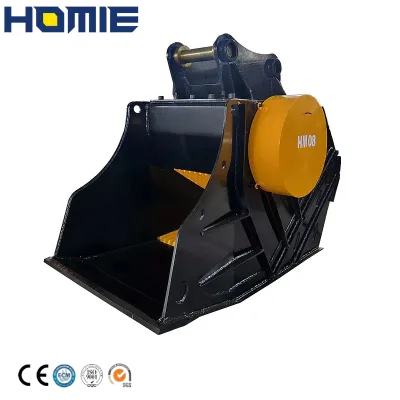
When evaluating chain drive construction machinery buckets, buyers must first distinguish between the primary lifting components and the auxiliary drive mechanisms that may be integrated into specific heavy equipment configurations. The core product category under investigation typically centers on the excavator bucket, a critical attachment designed for digging, loading, and material handling. Based on available product attributes, the market offers buckets specifically engineered for excavators, with model designations such as HSG80/4-1050-20 indicating specialized configurations. These units are often categorized by their material composition, which includes rock buckets, standard buckets, and other specialized uses tailored to the abrasiveness of the material being handled.
The technical specifications for these buckets vary significantly depending on the intended application. While some listings indicate a generic "All" or "Any Model" compatibility, others specify precise model numbers like Q345B, which refers to a high-strength low-alloy steel grade commonly used in heavy construction equipment. The physical dimensions are not uniform; specifications range from standard sizes to fully customized dimensions, with some data points suggesting specific packing dimensions like 20124 cm for smaller components or accessories. It is crucial for procurement teams to verify that the "chain drive" aspect of the query aligns with the actual mechanical design of the bucket, as many standard excavator buckets rely on hydraulic pins and linkage rather than a chain drive system. If a chain drive mechanism is required for a specific loader or paving machine application, the buyer must confirm the compatibility with the host machine's transmission and walking mode, such as the wheeled walking mode observed in medium-sized loaders with a rated load of 3-6 tons.
Compliance and Certification Verification Protocols
In the global construction machinery market, compliance with international standards is non-negotiable for ensuring safety and operational reliability. The supplied product data highlights several key certifications that buyers should prioritize during the vetting process. Products frequently appear with CE and ISO9001 certifications, indicating adherence to European safety standards and international quality management systems. Some listings also reference TUV certification, which adds a layer of third-party validation regarding product safety and performance.
However, buyers must exercise caution when interpreting these certifications. The presence of a certification label does not automatically guarantee that every unit in a batch meets the same rigorous standards. The data notes that certification status is often tied to the condition of the product, specifically "New" units. Therefore, when sourcing chain drive buckets, procurement officers should request valid, up-to-date certification documents for the specific batch being purchased. The standard for packaging and delivery also plays a role in compliance; while some products are shipped in wooden cases, others may utilize rack boxes or container shipping, depending on the quantity ordered. The standard "Customer Required" approach suggests that packaging protocols can be customized, but the underlying product must still meet the baseline safety and quality certifications required by the destination market.
Cost Drivers and Pricing Structure Analysis
The pricing structure for construction machinery buckets is influenced by a complex interplay of factors, including material costs, customization levels, and logistical requirements. The observed price range in the market spans from 1 USD to 50,000 USD, a vast disparity that reflects the difference between small accessories and large, fully customized heavy-duty buckets. This wide range indicates that a single "unit price" is often misleading without context regarding the specific model, size, and material thickness.
Several key cost drivers emerge from the product attributes. First, the material type is a primary determinant; buckets made from special alloy steel or high-grade Q345B steel will command a higher price than those made from standard carbon steel. Second, the level of customization significantly impacts cost. While some models are available as "Standard Size or Customized," the "Customization: Available" attribute suggests that bespoke dimensions or specialized teeth configurations will incur additional engineering and manufacturing fees. Third, the origin of the product affects pricing; products originating from Yuncheng County, Heze City, Shandong Province, or generally from China, may have different cost structures compared to other regions, though specific shipping costs and tariffs must be calculated separately. Finally, the "Nude" packing option versus "Standard Export Packing" or "Wooden Case" can influence the final landed cost, as protective packaging adds material and labor expenses but reduces the risk of damage during transit.
Typical Applications and Operational Compatibility
The versatility of construction machinery buckets is evident in the diverse applications listed in the product data. The primary application identified is for excavators, where the bucket serves as the fundamental tool for earthmoving. However, the data also points to applications in paving machinery, suggesting that certain bucket configurations or related attachments are utilized in road construction and maintenance scenarios. For loaders, the specifications indicate a rated load capacity of 3-6 tons, with a total weight of 17,500 kg for the complete machine, implying that the bucket must be engineered to handle substantial loads without compromising the stability of the wheeled walking mode.
When selecting a bucket for a specific application, buyers must cross-reference the equipment brand compatibility. The market supports a wide range of major manufacturers, including Cat, Komatsu, Hitachi, Volvo, Sany, and Doosan. This broad compatibility suggests that many buckets are designed as universal replacements or are easily adaptable to various chassis. However, the "Equipment Brands" attribute also lists "-Sany" specifically, which may indicate a specialized line or a primary focus on that brand in certain listings. For chain drive systems, the compatibility with the machine's transmission and power output is critical. The data mentions a rated power of 162/2000 kw/R/Min for certain loader models, which serves as a benchmark for the torque and power requirements the bucket attachment must withstand. Buyers should ensure that the bucket's weight and center of gravity align with the machine's rated load and tractive force capabilities, such as the 165kN max tractive force observed in specific medium-sized loaders.
Supplier Evaluation and Origin Considerations
Evaluating suppliers for construction machinery buckets requires a rigorous assessment of their manufacturing capabilities and geographic origins. The product data identifies Yuncheng County, Heze City, Shandong Province, as a specific origin point, which is a known industrial hub in China for heavy machinery components. While this location provides a baseline for the supply chain, buyers should not limit their search to a single region. The general origin "China" is also frequently cited, indicating a broad manufacturing base.
When assessing a supplier, the Minimum Order Quantity (MOQ) is a critical factor. The observed MOQ range is 1 to 15 units, offering significant flexibility for buyers who may need to test a single unit before committing to a larger order. An MOQ of 1 is particularly advantageous for small contractors or those seeking replacement parts for specific models. Additionally, the "Customization: Available" attribute is a strong indicator of a supplier's capability to adapt products to specific needs. Buyers should verify the supplier's ability to handle custom orders, as this often requires specialized tooling and engineering expertise. The "Quality: Long Life, Wearable and Stable" attribute suggests that suppliers should be able to provide data or testimonials regarding the durability of their products, although specific test results are not provided in the source data.
Quality Control and Finishing Standards
Quality control in the manufacturing of construction machinery buckets is paramount to ensuring safety and longevity. The product attributes highlight several quality indicators, including "Good Finishing" and the use of "Special Alloy Steel." These factors contribute to the "Long Life, Wearable and Stable" performance claims associated with the products. However, buyers must treat these as observations rather than guaranteed metrics for every unit. The "Condition: New" attribute is a standard requirement, ensuring that the product is not refurbished or used, which could compromise the structural integrity of the chain drive or bucket teeth.
The finishing process is another critical area for quality verification. A "Good Finishing" implies a smooth surface treatment that can resist corrosion and wear, which is essential for equipment operating in harsh environments. Buyers should request detailed information on the surface treatment methods used, such as painting, galvanizing, or hardfacing, to ensure they meet the specific environmental demands of their project. Furthermore, the "Standard Export Packing" or "Container" shipping methods suggest that the products are prepared for international transport, but the buyer should verify that the packing protects the bucket from damage during transit, especially for heavy items with a total weight of up to 17,500 kg for the complete machine.
Long-Term Procurement and Maintenance Considerations
Sourcing construction machinery buckets is not a one-time transaction but a long-term procurement strategy that involves maintenance and lifecycle management. The "Load and Unload Mode: Front Discharge" and "Walking Mode: Wheeled" attributes indicate that the bucket is part of a larger system that requires regular maintenance. Buyers should consider the availability of replacement parts, such as teeth and cutting edges, which are often the first components to wear out. The "Customized" size and model options suggest that suppliers may offer tailored maintenance solutions, but this must be confirmed during the negotiation phase.
The "Transmission: Power" attribute highlights the importance of the power delivery system in the overall efficiency of the bucket operation. Over time, the chain drive mechanism, if present, will require lubrication and inspection to prevent failure. Buyers should establish a maintenance schedule that aligns with the manufacturer's recommendations, which may vary based on the "Rated Load" and "Maximum Brakout Force" specifications. Additionally, the "Standard: 5 Ton" or "20124 cm" specifications serve as reference points for the capacity and dimensions, which should be monitored to ensure the bucket remains within its safe operating limits. By focusing on these long-term considerations, buyers can maximize the return on investment and minimize downtime in their construction operations.
FAQs
What certifications do chain drive construction machinery buckets typically have?
These buckets typically carry CE and ISO9001 certifications to ensure safety and quality standards. Some listings also include TUV certification for third-party validation. Buyers should verify that these certifications apply to new units and specific batches before purchasing.
Which material types are used for excavator buckets in this category?
Buckets are commonly made from special alloy steel or Q345B high-strength low-alloy steel. The material type often varies between rock buckets, standard buckets, and other specialized uses depending on the abrasiveness of the material being handled during excavation.
Can buyers customize the size and model of these construction buckets?
Yes, customization is available for size and model specifications. Buyers can request standard sizes or fully customized dimensions to fit specific machinery like excavators or paving equipment. This flexibility allows for tailored solutions for different operational needs.
What is the minimum order quantity for sourcing these buckets?
The minimum order quantity ranges from 1 to 15 units depending on the supplier. An MOQ of 1 is available, which is beneficial for testing single units or replacing specific parts. This low entry point supports small contractors and replacement part needs.
How are these buckets typically packed for international shipping?
Packing options include wooden cases, rack boxes, containers, or standard export packing. Some items may be shipped nude depending on the quantity and specific customer requirements. The packaging standard often depends on the quantity ordered to ensure safe transit.
Which equipment brands are compatible with these excavator buckets?
These buckets are compatible with major brands such as Cat, Komatsu, Hitachi, Volvo, Sany, and Doosan. Some listings specifically highlight Sany compatibility. The broad compatibility suggests they are designed as universal replacements or easily adaptable attachments for various chassis.
Where are these construction machinery buckets typically manufactured?
Products originate from locations such as Yuncheng County in Heze City, Shandong Province, or generally from China. This region is a known industrial hub for heavy machinery components. Buyers should consider the origin when calculating logistics and potential tariffs.